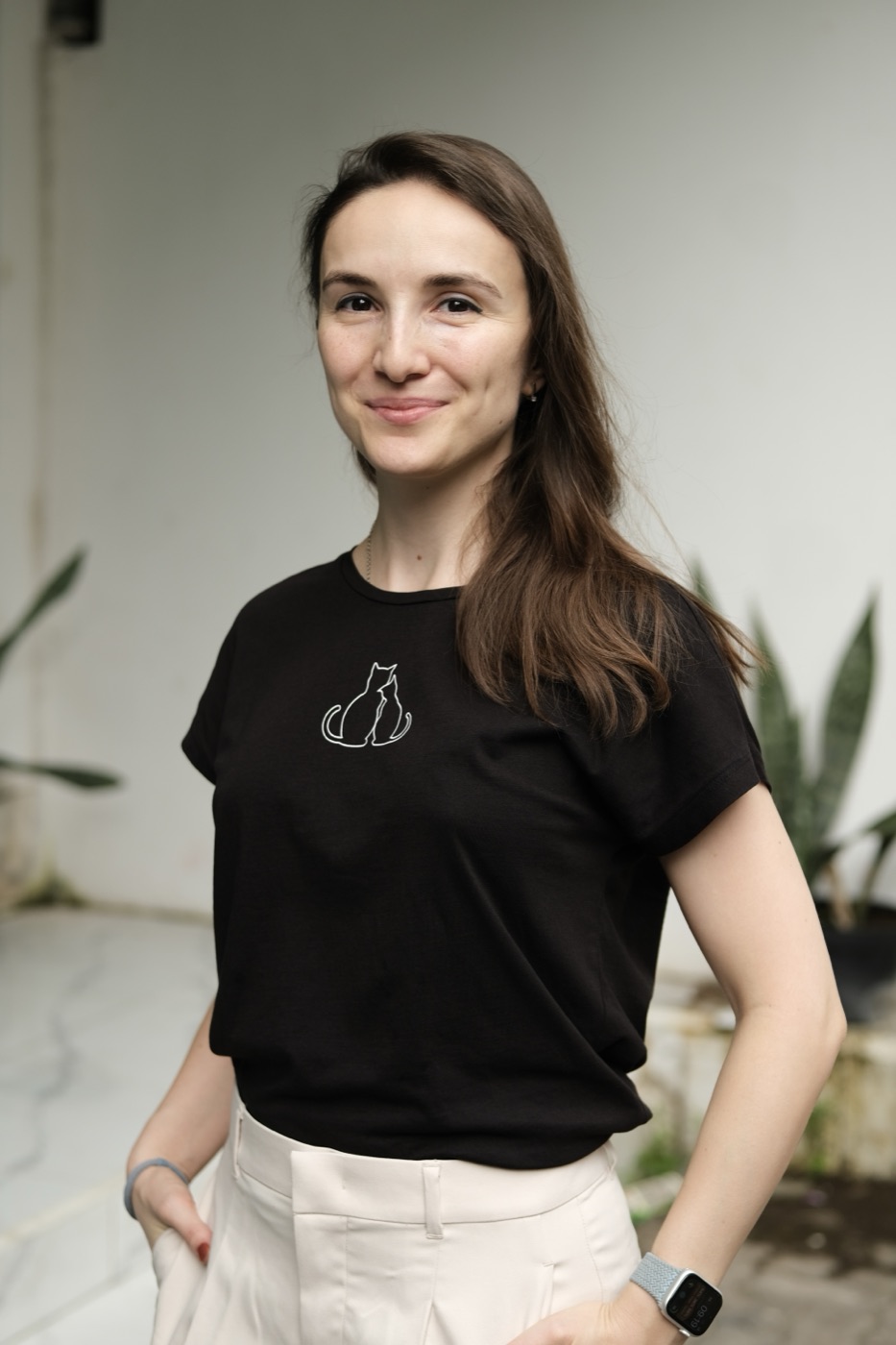
Diana Chemazokova

Open to COO · CEO / GM of a business unit · Head of Operations

I run operations that depend on a lot of people doing small things right.

Fifteen dark kitchens and a hundred cooks. A forty-person restaurant-ops team across Kazakhstan. An education network in seven Indonesian cities, with full P&L responsibility.

The work is the same each time: find what the numbers actually measure, fix the hundred small things in scripts, statuses and hand-offs — and keep a large frontline team disciplined and, somehow, happy about it. This page replaces my CV: each case says what I did, what changed, and what I can't prove.

Latest
CEO, offline business, Algonova Indonesia — P&L, 7 cities
Before
Yandex Eats Kazakhstan · Rees46 · Bright Kitchen
Languages
English fluent · Russian native
Diana Chemazokova

Method

How I work

  1. Define the metric before improving it.

    Who counts as an active student? Is a "picked up order" status real or set 200 m down the road? Does "retention" mean attendance or a signed cancellation? A wrong definition breaks the forecast, the bonuses and the investment decision at once.

  2. Go from the aggregate to one case.

    Overall conversion fell — so look by city, by source, by stage, then read the history of one lead. One seven-year-old closed "too young" and later sold through a diagnostic test told me more about the rule than the dashboard did.

  3. Turn the diagnosis into a rule someone owns.

    A new CRM status, a mandatory field, a cap on catch-up lessons, a payment date, an escalation route with named people. Not "be more careful" — a change in the mechanism, with an owner.

  4. Check the side effects, then hand it over.

    A bigger package changes later payments; fewer catch-ups change the learning experience; a scan button changes courier mistakes. I look before I ship, and I teach the branch managers to run the diagnosis themselves so it doesn't come back to me.

The part that doesn't fit a step: large teams of frontline people — cooks, couriers, tutors, sales consultants. I keep them held to a standard and they still like coming to work. I don't have a formula for it; the cases below have some of the evidence.

Where

Roles

YearsCompany · roleScale
2025–26Algonova IndonesiaCEO, offline business — P&L responsibilityCoding & digital-skills schools for kids in 7 cities (Bandung, Bandar Lampung, Surabaya, Semarang, Malang, Denpasar, Medan). Branch directors + functional leads for sales, marketing, retention, facilities.
2024–25Yandex Eats KazakhstanHead of Restaurant Operations40-person restaurant support & content team. Opened the service in 8 new cities. Owned partner quality: cancellations, wrong orders, bad food, menu completeness.
2022–24Rees46Product Owner / PME-commerce marketing automation. 5-engineer team; Stories widget, trigger-email app for Shopify.
2018–22Bright KitchenCOO (from Director of Business Development)Dark-kitchen startup (Varlamov.Est, Carrots.Kitchen). 15 kitchens, 100+ cooks, own brand and sales channels.
2015–18Invisible WineProject ManagerOnline wine store. Built the call centre from scratch, packaging, hiring and onboarding, office move.
2013–15HipwaySenior Customer Service SpecialistTop-3 online travel agency. Trained the support team; fixed the unconfirmed-tour process.
2010–13NewYorker RusFloor sales → Deputy Store DirectorFashion retail. Shifts, inventory, store team.

Cases

What I actually did

Open a case for the problem, the change and the honest boundary. Numbers carry their period and source.

Algonova2025–26retention · data

Retention was measuring the wrong thing

Two "true" numbers — 85% by attendance, 97% by formal cancellations. Rebuilt the accounting around real behaviour; a debtor registry appeared where none existed.

Problem

Online retention logic had been copied onto an offline model with lesson deposits. Active base, debt and critical debt weren't separated. A parent who stops coming rarely bothers to cancel formally, so the dashboard looked fine while classrooms emptied.

What I did

Refused to pick the prettier number. Took students absent for a whole month and traced what they did next — returned, topped up, sat in the system until lessons ran out. Wrote the definitions for analysts (active / debtor / critical, when "churn" is an event), got a weekly debtor report by office, cleaned the base. Then attached actions: a deposit top-up programme with a clear explanation of what the deposit is for, and Bandung's practice of billing everyone by the 10th rolled out to every branch.

What changed

A debtor registry and weekly follow-up that didn't exist before. In my self-review I reported retention of 96.9% in May 2026 versus roughly 89% earlier.

Boundary

The methodology changed along the way, so the before/after isn't a clean causal number. What's solid: the definitions, the registry, the billing date, and that the team acts on the report.

Algonova2026cost · rules

Teacher costs 40% over plan

"We plan badly" wasn't a cause. Found that in some cities compensation lessons outnumbered regular ones; set a cap and made lead tutors own it.

Problem

Teacher payouts ran ~40% above plan month after month. The accepted explanation was inaccurate planning, which nobody can manage.

What I did

Pulled monthly payout documents with the analysts, clarified how teachers are paid, and compared regular versus catch-up lessons. In several branches catch-ups exceeded regular lessons. Turned it into a rule: catch-up cost capped at 20% of regular lesson cost in June, 10% from July — written into lead tutors' goals, with learning quality as the constraint on how far to cut.

What changed

One branch manager reported catch-ups down from 140 to 8 lessons a month.

Boundary

That's one branch's report, not a verified network figure. The savings I modelled (~$1.4k for June, ~$2.1k monthly after) were projections, not booked results.

Algonova2026sales funnel

More leads, not more sales

The team blamed the growing share of flyer leads. The online leads were dropping too: first contact was late, half the booking team was new, and the QC rules had them chasing old leads instead of new ones.

Problem

Lead volume grew, sales didn't. Lead-to-booking fell, and the story was "offline sources are lower quality".

What I did

Split the traffic-mix effect from the processing effect: compared conversion inside each source, by city, by stage. Online was degrading as well. The mechanism: delayed first contact, a mostly new booking team, and an SLA/QC scheme that rewarded working old leads. Reworked priorities toward speed, scripts and slot allocation, and set a routine: every lead that didn't reach booking gets a reason, reasons get grouped, each group gets a small fix. Separately, removed a post-booking budget question that was suppressing show-ups (28 May) and watched booking-to-attendance afterwards.

What changed

Diagnosis and the operating routine. Attendance-to-sale for 2026 YTD was compared at 31.7% against a 2025 average of 27.1% in July discussions.

Boundary

We found this later than we should have — I said so in the presentation. And when show-ups rose after the question was removed, lead qualification changed at the same time, so I didn't claim the credit.

Algonova2025org design · rhythm

From "old cities / new cities" to a matrix

Two managers doing the same job for different city groups. Redrew it: branch directors own the city P&L, functional leads own the method. Friday dashboard, Wednesday action.

Problem

Functions and processes were tangled between two parallel managers; people's strengths were used unevenly; the weekly meeting was a reading of numbers with answers arriving a week late.

What I did

Had both managers describe their processes and what they wanted to own, mapped the work by function, and proposed the structure: branch directors run operations and the school's P&L; functional owners run sales, standards, projects and support. Later added a Student Experience & Retention Lead. Changed the rhythm rather than the slide template: Friday we open the dashboard together with no prepared slides, split the questions between marketing and booking, and by Wednesday the owners come back with a plan. When a manager left, his processes went into three piles — to branches, to the sales lead, and "nobody yet, document it thoroughly".

What changed

By November the matrix was the working principle, not an idea. The Friday meeting was in calendars from 15 October. Onboarding got a team-structure overview after an engagement survey showed new hires didn't understand how the functions connected — a gap I owned rather than blamed on "low engagement".

Boundary

Effect on decision speed wasn't measured. And I got one thing wrong on the way: a decision about hiring local marketers wasn't communicated in time, which caused a flare-up; I fixed the routing so functional leads see such decisions immediately.

Algonova2026P&L · expansion

Saying no to growth the model couldn't prove

Reforecast on real conversions, nine cities researched against criteria, one loss-making site closed, one new city opened — Medan, the seventh.

Problem

An ambitious model and the actual numbers had drifted apart. Opening more cities on unverified assumptions would scale the loss.

What I did

Rebuilt the forecast with finance: correct historical conversions, the real lag to second payment, branch result shown separately from CAPEX and HQ allocations. Framed the question for the board as "under what conditions does the model work, and which of them have we already confirmed with facts" — and proposed letting the changes already made show their effect before expanding. Set up research on Makassar, Batam, Bogor, Pekanbaru, Palembang, Balikpapan, Samarinda, Bekasi and Padang: paying families, schools and residential density, competitors, site availability, branch economics, a strong local lead — plus our own online-lead history and the behaviour of online students from those cities. For Madiun, checked that free rent isn't the same as a viable branch. For Surabaya West: small active base, renewing the lease meant roughly $4–4.5k of loss, so we moved the students and closed it — splitting the legal closure from a late water bill so one didn't hold up the other.

What changed

Medan launched as the seventh city; the local branch manager gets the credit for the site and the opening, I ran the goals, the commercial follow-through and the launch communication. West Branch was being vacated by July.

Boundary

I was the business owner and requirement-setter on the financial model, not its sole author. Which researched cities opened afterwards, and how much loss was avoided, isn't proven by what I have.

Yandex Eats Kazakhstan2024–25quality · fraud · frontline team

"We don't know who's cheating, but someone is"

Cringe-order rate 8.9% and worse than other markets. Product and partners were at their ceiling; the lever was couriers, clients and support logic. Failed-call cancellations 447 → 336.

Problem

Kazakhstan's share of bad orders (cancellations, wrong orders, bad food) sat at 8.9% against a target of 7.5%. Nine months of partner work — auto-blocks, integrations, stop-lists on cancellation, photo control — had taken restaurants about as far as they could go.

What I did

Decomposed the rate by partner and cause, and built a quarter plan with a number on each initiative: long-tail contact and schedule refresh, auto-stop for "dish missing", KFC integration, promo-code-only compensation for KFC, fraud excluded from the wrong-order calculation, "dead souls" auto-disabling of inactive places. Courier fraud on "failed call" cancellations — couriers phoning support, "can't reach the restaurant", cancel — was removed by taking the call out of the flow: the courier hands the phone to a restaurant employee. On the client side, 76% of accounts sat in an unrated "grey" zone; set a target of ≤20% and added a loss-making-client rule: LTV minus cash, promo and logistics compensation below zero means no more cash refunds. Hired a content collector for small cities. Started removing the 200 lowest-performing partners.

What changed

Failed-call restaurant cancellations 447 → 336. Menu completeness in the smallest city 60% → 72% in two weeks. On my CV for the period: partner cancellations down to 0.73%, bad-food refunds cut by 25%, wrong orders down 1 pp, bad-food incidents down 17 pp, courier pick-up wait down 1 minute, service opened in 8 new cities. The 40-person team was named innovation leader across international Yandex Eats.

Boundary

The per-initiative reductions (e.g. RC 1.16% → 1.12%) were the plan's targets; the CV figures are what I reported for the period, not audited outcomes. The team recognition is the company's, which I'm happy to have references confirm.

Rees462022–24engineering process

Too many tasks in flight, nobody knew what was where

One board, WIP limits, and every stakeholder estimates the money and the probability before filing an issue.

Problem

Too much work in progress, constant priority conflicts, no time ever left for legacy, and opaque progress that had customers blaming engineering and engineering blaming customers.

What I did

One board for all development work; nothing gets worked on that isn't on it. WIP limits: backlog 40 (bugs 10 / features 20 / legacy 10), to-do 10, one task per developer. A single product owner sets priority. Every issue carries two lines from its author — size of the possible economic effect and the probability it happens — because a $10 issue shouldn't cost everyone's time. Launched 21 December 2022 after two weeks of collecting objections and cleaning the board.

What changed

A 5-engineer team with a visible queue and a predictable "when": on any priority task, an estimate within hours. I also owned the Stories widget as a product and the trigger-email app for Shopify.

Boundary

The four goals — transparency, predictability, decomposition, three-month onboarding — were the design; I don't have throughput numbers to show against them.

Bright Kitchen2018–22ops build-out · 100+ cooks

Fifteen dark kitchens under $50k each

Site search, leases, construction, equipment — then running them. Prep time 22 → 15 min, output per cook 16 → 21 orders a day.

Problem

A dark-kitchen startup (Varlamov.Est, Carrots.Kitchen, Vedomosti.Lunch and others) needed to open fast and cheap, then run a hundred-plus cooks across sites without the wheels coming off.

What I did

Opened 15 kitchens end to end — search, rental agreements, build and equipment — at the lowest opening cost I'm aware of in the segment, under $50k (3 million roubles) per kitchen. Opened sales channels (catery.ru, Yandex Lavka, WeWork) and built our own brand, Carrots: agency, site, apps, fulfilment, promotion; the brand was nominated for G8 Awards. Moved from Director of Business Development to COO and ran the team of 100+.

What changed

Order hand-out time 22 → 15 minutes; output per cook 16 → 21 orders a day — both beyond the planned targets.

Boundary

These are CV-level figures from 2018–22; I can talk through the mechanics, but I don't have the working files to hand any more.

Looking for

What I'm looking for

The role

Running a business or its operations: COO, CEO or GM of a business unit in a small company — or director level in a large one. P&L is welcome; I've held it.

The business

I'm at my best when there's a physical layer — kitchens, branches, couriers, partners, a frontline team. I can work without it.

Geography

Preferably outside Russia. Preferably compatible with US time zones. Neither is a hard line.

The environment

A team where people are treated well. I hold people to a standard, and I need that to be the culture rather than something I fight for.

Also

Tools, learning, life

Tools I run a business on

  • Google Sheets / Excel — plan-fact, bonuses, forecasts, checking other people's formulas
  • Power BI — as the business owner of the numbers, not the DAX author
  • amoCRM, LMS, Jira; Miro for process maps
  • AI as a daily instrument — with the habit of rejecting made-up numbers

Education

  • Natalia Nesterova Moscow Academy of Education — tourism & hospitality, 2012
  • Yandex EdTech — QA engineer retraining programme, 2023
  • Certified Montessori teacher

Weak spots I'm working on

  • Staying in operational detail too long — now two or three quarter-level focuses, with execution handed over earlier
  • Packaging systemic work as money, speed or risk for the board, not just "it's transparent now"

Outside work

  • Yoga, snowboard, running, muay thai
  • A Doberman
  • Volunteer at running events; used to organise music festivals

Contact

Write to me

chemazokova.dia@gmail.com

Telegram · @Di_Chemazokova

References from Algonova and Yandex Eats on request. A one-page CV as well, if your process needs one.